


CosmicError
Member
- Feb 4, 2026
- 40
i saw a guide that said noose knot is good but another guide that says arbor knot is best which one is it.
We wanted to share a quick update with the community.
Our public expense ledger is now live, allowing anyone to see how donations are used to support the ongoing operation of the site.
👉 View the ledger here
Over the past year, increased regulatory pressure in multiple regions like UK OFCOM and Australia's eSafety has led to higher operational costs, including infrastructure, security, and the need to work with more specialized service providers to keep the site online and stable.
If you value the community and would like to help support its continued operation, donations are greatly appreciated. If you wish to donate via Bank Transfer or other options, please open a ticket.
Donate via cryptocurrency:


I do trust your judgement, but I'm confused as to this sudden switch in regards to knot preferences. For years the slip knot was the holy grail on this forum and presumably countless people have CTB using it. If it isn't a self-tightening knot like you've claimed elsewhere, how come?Both are self-tightening knots. Both are good options.
They are almost identical. The Arbor Knot is simply a Noose Knot with a knot (overhand knot) at the free end.
The knot at the free end provides more security to the ligature so that it does not come undone; it is a simple stopper knot (overhand knot).
It is good to leave at least 15/20 cm of free end in the ligature. This will ensure it doesn't come undone.
[Hidden content]
thank you soo much you are the best man.Both are self-tightening knots. Both are good options.
They are almost identical. The Arbor Knot is simply a Noose Knot with a knot (overhand knot) at the free end.
The knot at the free end provides more security to the ligature so that it does not come undone; it is a simple stopper knot (overhand knot).
It is good to leave at least 15/20 cm of free end in the ligature. This will ensure it doesn't come undone.
[Hidden content]
When have I ever said it's good to use the Slip Knot? Don't put words in my mouth. Learn to differentiate between names and knots, instead of stating things I never said.I do trust your judgement, but I'm confused as to this sudden switch in regards to knot preferences. For years the slip knot was the holy grail on this forum and presumably countless people have CTB using it. If it isn't a self-tightening knot like you've claimed elsewhere, how come?
When have I ever said it's good to use the Slip Knot? Don't put words in my mouth. Learn to differentiate between names and knots, instead of stating things I never said.
It's really annoying that users don't bother to read properly or do their research.
• Slip knot (fixed knot = static loop that does not change size under load) It has that name because it can be easily untied by pulling the free end of the rope.
• Noose knot (self-tightening knot = tightens itself under load, the loop will get smaller under load)
• Arbor knot (self-tightening knot = tightens itself under load, the loop will get smaller under load)
Arbor Knot or Noose Knot (which is the same as the Arbot Knot but without the stopper knot at the free end, see the photo I made in the previous post) are the knots to use. For both, leave 15/20 cm of rope at the free end.
For the Arbor Knot, make the stopper knot as close to the loop as possible.
Don't confuse knots. It's a mistake. The Slip Knot is a fixed knot; its name comes from the fact that it's easy to untie (when you pull on the free end).
Practice tying knots with a rope, and you'll notice the difference.
As for CTB, you can use any knot you like; no one is forcing users to choose the Arbor Knot. I only recommend those that have advantages that can help with the method.
Self-tightening knots have the advantage that they will close themselves when the body weight is applied (suspended/hanging), tightening fully on their own and compressing the arteries and veins continuously and consistently. There will be no gaps in the ligature.
Everyone is free to choose. I would never recommend a fixed knot for the ligature.
Be serious, this isn't a game or a place for entertainment. If you're going to talk about methods, do it with the seriousness they deserve.

Isn't double overhand stopper better? Especially with thicker and stiffer ropes like kernmantle nylon 12mm rope.Both are self-tightening knots. Both are good options.
They are almost identical. The Arbor Knot is simply a Noose Knot with a knot (overhand knot) at the free end.
The knot at the free end provides more security to the ligature so that it does not come undone; it is a simple stopper knot (overhand knot).
It is good to leave at least 15/20 cm of free end in the ligature. This will ensure it doesn't come undone.
[Hidden content]
Careful it's gonna reply with a long passive-aggressive monologue chastising you for asking a question all while being outraged at things you never saidIsn't double overhand stopper better? Especially with thicker and stiffer ropes like kernmantle nylon 12mm rope.
I suggest you try double overhand stopper for the free end of the noose knot depending on what rope you are usingthank you soo much you are the best man.
Sure, you can also use the Double overhand Knot as a stopper knot.Isn't double overhand stopper better? Especially with thicker and stiffer ropes like kernmantle nylon 12mm rope.
I think we should mention that for stiff ropes double overhand is better because it will not shake loose. I'm using kernmantle rope myself and the overhand stopper just doesn't work, double overhand works just great. Also what do you think about buntline hitch knot for anchor point?Sure, you can also use the Double overhand Knot as a stopper knot.
You can make that change to the ligature if you wish (replacing the Overhand Knot of the Arbor Knot with that one)
Both stopper knots serve the same function (a safety mechanism tied at the end of a rope preventing the ligature from coming undone).
I see. For that reason, I don't recommend ropes with an internal core. They are stiffer and more difficult to handle.I think we should mention that for stiff ropes double overhand is better because it will not shake loose. I'm using kernmantle rope myself and the overhand stopper just doesn't work, double overhand works just great. Also what do you think about buntline hitch knot for anchor point?
I think instead of narrowing down types of ropes we should find the right approach for any particular rope. That will leave more options for anyone trying to make the attempt work. My rope is a bit stiff but i found the right knots for it and it works perfectly well just like rope without core. Also buntline hitch knot is a jam knot which means that after you apply big force on it like your body weight it jams and you actually will need tools to untie it, so it definitely doesn't need any stopper knot the free end will just crush between the knot and the anchor it will jam and not move at all even if you try to move it by hands shake the knot and all sorts of things.I see. For that reason, I don't recommend ropes with an internal core. They are stiffer and more difficult to handle.
Personally I prefer single braided ropes (also called: hollow braid, without a core), they are more flexible; you can adjust and tighten the knots easily.
The Buntline Hitch Knot for the anchor point isn't bad; it's not my favorite, but you can use it. You can add a stopper knot to the free end to make it even more secure (I recommend doing this to all knots)
[Hidden content]
I like the Anchor Hitch + stopper knot for the anchor point setup.
But as I mentioned, it's a matter of taste. The important thing is that it's a secure knot, one that won't come undone under any circumstances. If you've tested it and it works well, then there shouldn't be any problems.

I see. For that reason, I don't recommend ropes with an internal core. They are stiffer and more difficult to handle.
Personally I prefer single braided ropes (also called: hollow braid, without a core), they are more flexible; you can adjust and tighten the knots easily.
The Buntline Hitch Knot for the anchor point isn't bad; it's not my favorite, but you can use it. You can add a stopper knot to the free end to make it even more secure (I recommend doing this to all knots)
[Hidden content]
I like the Anchor Hitch + stopper knot for the anchor point setup.
But as I mentioned, it's a matter of taste. The important thing is that it's a secure knot, one that won't come undone under any circumstances. If you've tested it and it works well, then there shouldn't be any problems.
You can do what feels right to you. You can assemble your setup as you please. Type of rope, thickness, knots.. it's up to each individual. It's your attempt after all.I think instead of narrowing down types of ropes we should find the right approach for any particular rope. That will leave more options for anyone trying to make the attempt work. My rope is a bit stiff but i found the right knots for it and it works perfectly well just like rope without core. Also buntline hitch knot is a jam knot which means that after you apply big force on it like your body weight it jams and you actually will need tools to untie it, so it definitely doesn't need any stopper knot the free end will just crush between the knot and the anchor it will jam and not move at all even if you try to move it by hands shake the knot and all sorts of things.
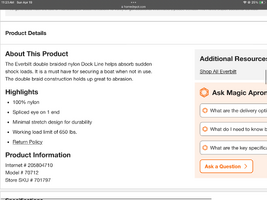
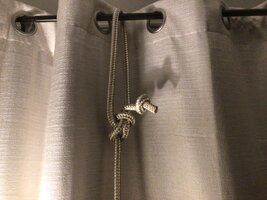
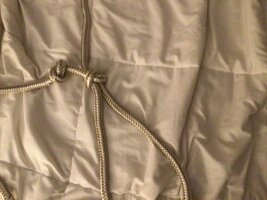
Sure, it will do the job. Remember to test everything: anchor point, knots, rope..I'm using a 1/2 inch dock line rope that is pretty stiff but not too bad. Haven't been able to test it on my preferred anchor point, im planning on using a bowline and arbor knot for my noose. Do you think whilst not being the rope you recommend, can still do the job?View attachment 199671View attachment 199672View attachment 199673
Yeah with the door thing I completely agree it's better to use rope without a core, but for attempts where there is an anchor point like a pull-up bar, a rod or a tree then the kernmantle rope doesn't really make it that more difficult to be honest. Not more difficult that just finding the right knots. For me Buntline Hitch knot solved the problem with anchor point because for bowline knot and anchor hitch knot it tended to shake loose the knot or the half hitch of the anchor hitch, but with the Buntline Hitch it just crushes itself against the anchor point without shake loosing or the free end slipping. Same with the double overhand which doesn't shake loose unlike overhand knot for stiff ropes. So maybe we should mention that it can solve the problem for those who have kernmantle rope instead of telling template of bowline/anchor hitch + arbor knot which people often use for their thick stiff ropes and end up failing.You can do what feels right to you. You can assemble your setup as you please. Type of rope, thickness, knots.. it's up to each individual. It's your attempt after all.
I gave you the opinion you asked for.
(For me) It is best to choose materials that are easier to work with from the start (and have more advantages). I prefer not complicate things.
A single braided rope/hollow braid is cheap and easy to find. It is flexible, easy to maneuver, you can flatten it and pass it over the door and close it (frequent anchor point for full hanging), you can tighten the knots tightly without any problems..
Kernmantle ropes or ropes with an internal core, in my opinion, add an unnecessary difficulty.
You are free to choose.
Sure, it will do the job. Remember to test everything: anchor point, knots, rope..
Practice the knots, check that your anchor point is strong and resistant (tie the rope to it and hang with your hands applying all your weight, repeat this several times (the structure should not suffer any change)


