• Hey Guest,

    We wanted to share a quick update with the community.

    Our public expense ledger is now live, allowing anyone to see how donations are used to support the ongoing operation of the site.

    👉 View the ledger here

    Over the past year, increased regulatory pressure in multiple regions like UK OFCOM and Australia's eSafety has led to higher operational costs, including infrastructure, security, and the need to work with more specialized service providers to keep the site online and stable.

    If you value the community and would like to help support its continued operation, donations are greatly appreciated. If you wish to donate via Bank Transfer or other options, please open a ticket.

    Donate via cryptocurrency:

    Bitcoin (BTC):
    Ethereum (ETH):
    Monero (XMR):
stoiccactus

stoiccactus

somehow still here
Mar 24, 2022
278
Just saw this story in the NYTimes this morning:


Assisted suicide in Switzerland. This is a thing you can do for depression? I had no idea. Time to re-up that passport.
 
  • Like
  • Hugs
Reactions: HAKMKS, Infernal and Rational man
stoiccactus

stoiccactus

somehow still here
Mar 24, 2022
278
Oh the clinic even has an english language website. Very nice. In Basel of all places, where Nietzsche spent his days of mental illness.

 
  • Hugs
  • Like
Reactions: Infernal and Rational man
Rational man

Rational man

Enlightened
Oct 19, 2021
1,482
Im unable to read. Needs subscription, however NYT. I wonder if this article may give other people some interesting ideas?
 
  • Like
Reactions: Infernal and Smart No More
suicidesheep31.1

suicidesheep31.1

hurt by life
Aug 7, 2022
104
Obituaries|Norah Vincent, Who Chronicled Passing as a Man, Is Dead at 53


Norah Vincent, Who Chronicled Passing as a Man, Is Dead at 53

Her best-selling 2006 book about that experience, "Self-Made Man," made her a media darling. But it cost her psychologically.

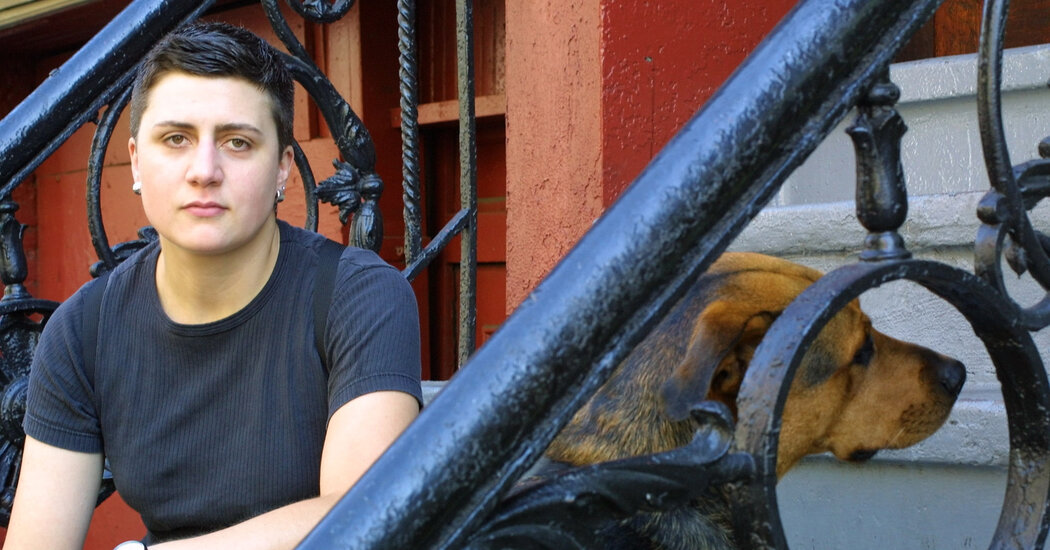
Norah Vincent in 2001 in her neighborhood on the Lower East Side of Manhattan. For a book, she spent 18 months living as a man named Ned, putting him in hypermasculine situations.

Norah Vincent in 2001 in her neighborhood on the Lower East Side of Manhattan. For a book, she spent 18 months living as a man named Ned, putting him in hypermasculine situations. Credit...Chester Higgins Jr./The New York Times

Penelope Green
By Penelope Green
Published Aug. 18, 2022Updated Aug. 19, 2022, 12:25 p.m. ET
In the winter of 2003, Norah Vincent, a 35-year-old journalist, began to practice passing as a man.
With the help of a makeup artist, she learned to simulate stubble by snipping bits of wool and painting them on her chin. She wore her hair, already short, cut in a flattop, and bought rectangular framed glasses, to accentuate the angles of her face. She weight-trained to build up the muscles in her chest and back, bound her breasts with a too-small sports bra and wore a jock strap stuffed with a soft prosthetic penis.
She trained for months with a vocal coach at the Juilliard School in Manhattan, who taught her to deepen her voice and slow it down, to lean back as she spoke rather than leaning in, and to use her breath more efficiently. Then she ventured out to live as a man for 18 months, calling herself Ned, and to chronicle the experience.


Ms. Vincent's book was a nearly instant best seller and led to appearances on "20/20" and "The Colbert Report."

Ms. Vincent's book was a nearly instant best seller and led to appearances on

She did so in "Self-Made Man," and when the book came out in 2006, it was a nearly instant best seller. It made Ms. Vincent a media darling; she appeared on "20/20" and on "The Colbert Report," where she and Stephen Colbert teased each other about football and penis size.

But the book was no joke. It was a nuanced and thoughtful work. It drew comparisons to "Black Like Me," the white journalist John Howard Griffin's 1961 book about his experiences passing as a Black man in the segregated Deep South. David Kamp, writing in The New York Times Book Review, called Ms. Vincent's book "rich and audacious."
Ms. Vincent died on July 6 at a clinic in Switzerland. She was 53. Her death, which was not reported at the time, was confirmed on Thursday by Justine Hardy, a friend. The death, she said, was medically assisted, or what is known as a voluntary assisted death.


Ms. Vincent was a lesbian. She was not transgender, or gender fluid. She was, however, interested in gender and identity. As a freelance contributor to The Los Angeles Times, The Village Voice and The Advocate, she had written essays on those topics that inflamed some readers.
She was a libertarian. She tilted at postmodernism and multiculturalism. She argued for the rights of fetuses and against identity politics, which she saw as infantilizing and irresponsible. She did not believe that transsexuals were members of the opposite sex after they had surgery and had taken hormones, a position that led one writer to label her a bigot. She was a contrarian, and proud of it.

In her year and a half living as Ned, Ms. Vincent put him in a number of stereotypical, hypermasculine situations. He joined a blue-collar bowling league, though he was a terrible bowler. (His teammates were kind and cheered him on; they thought he was gay, Ms. Vincent learned later, because they thought he bowled like a girl.)

He spent weeks in a monastery with cloistered monks. He went to strip clubs and dated women, though he was rebuffed more often than not in singles bars. He worked in sales, hustling coupon books and other low-margin products door-to-door with fellow salesmen who, with their cartoon bravado, seemed drawn from the 1983 David Mamet play "Glengarry Glen Ross."
Finally, at an Iron John retreat, a therapeutic masculinity workshop — think drum circles and hero archetypes — modeled on the work of the men's movement author Robert Bly, Ned began to lose it. Being Ned had worn Ms. Vincent down; she felt alienated and disassociated, and after the retreat she checked herself into a hospital for depression.
She was suffering, she wrote, for the same reason that many of the men she met were suffering: Their assigned gender roles, she found, were suffocating them and alienating them from themselves.
"Manhood is a leaden mythology riding on the shoulders of every man," she wrote, and they needed help: "If men are still really in power, then it benefits us all considerably to heal the dyspeptic at the wheel."
Ms. Vincent practiced another feat of immersive journalism for her next book, "Voluntary Madness: My Year Lost and Found in the Loony Bin" (2008).
The idea came to her after her Iron John unraveling, when she had committed herself to the hospital as a suicide risk. While in treatment, she said, she thought to herself: "Jesus, what a freak show. All I have to do is take notes and I'm Balzac."

What transpired was less tidy than "Self Made Man," however. As she toured mental institutions — a Bellevue-like urban one, a high-end facility in the Midwest and finally a New Age clinic — Ms. Vincent found herself increasingly mired in depression and juggling a cocktail of medications. The book's conclusion did not endear her to reviewers, as she exhorted those in extremis like her to move on and "put your boots on."

Image
Ms. Vincent's second book was inspired by her own experience after committing  herself to a clinic as a suicide risk.

Ms. Vincent's second book was inspired by her own experience after committing herself to a clinic as a suicide risk.Credit...Fernando Ariza/The New York Times
Norah Mary Vincent was born on Sept. 20, 1968, in Detroit. Her mother, Juliet (Randall) Ford, was an actress; her father, Robert Vincent, was a lawyer for the Ford Motor Company. The youngest of three, Norah grew up in Detroit and London, where Mr. Vincent was posted for a while.
She studied philosophy at Williams College, where at 21 she realized she was a lesbian, she told The New York Times in 2001, when her contrarian freelance columns began drawing fire. She spent 11 years as a graduate student in philosophy at Boston College and worked as an assistant editor at the Free Press, a publishing house that before it folded in 2012 put out books on religion and social science and had, in the 1980s, a neoconservative bent.
Ms. Vincent's first work of fiction was "Thy Neighbor" (2012), a dark, comic thriller about an unemployed alcoholic writer who begins spying on his neighbors while trying to solve the mystery of his parents' murder-suicide: voyeurism as a means to self-knowledge. "I'll never be whole or unharmed or kind again," Nick, her protagonist, says. "But I can know everything about my neighbors' lives, and in so doing, I can ease what is unsatisfied in me."
Ms. Vincent is survived by her mother and her brothers, Alex and Edward. From 2000 to 2008, her domestic partner was Lisa McNulty, a theater producer and artistic director. A brief marriage to Kristen Erickson ended in divorce.
In 2013, Ms. Vincent began a new novel, "Adeline," in which she imagined the inner life of Virginia Woolf from the moment Woolf conceived her novel "To the Lighthouse" — in her bathtub — to the morning in 1941 when she walked into the river near her home in Sussex, England, her pockets filled with stones, and drowned.

As Ms. Vincent was working on the book, she tried to kill herself.
"Adeline," she wrote later in an essay for the website Literary Hub, was "not just a work of fiction, or an act of literary ventriloquism. It was my suicide note."

Getting dangerously lost in her work was nothing new, she added. "In 'Adeline,' I did what I had done so often before. I disappeared into someone else, and I emerged as myself."
When the book was published in 2015, Carlene Bauer, a novelist and memoirist, reviewed it for The New York Times Book Review. "Vincent," she wrote, "is a sensitive recorder of a mind's movements as it shifts in and out of inspiration, and as it fights before submitting to despair."

 
  • Informative
Reactions: chloramine
Jrmull1993

Jrmull1993

Warlock
Jul 13, 2022
753
The NY Times... Anyone else smell the hypocrisy....
 
  • Like
Reactions: Monoblock_Chair and FrozenMango
stoiccactus

stoiccactus

somehow still here
Mar 24, 2022
278
  • Like
Reactions: mlcs, FrozenMango, Vanrock3000 and 1 other person
S

Sick of it all

It's only a matter of time and I'm running out
Aug 17, 2022
214
Same here. I'm glad they let the name slip or I would have been gone days ago.
 
Rational man

Rational man

Enlightened
Oct 19, 2021
1,482
Dignitas is often on news channels in UK, commenting on latest person to fly out there.
 
FrozenMango

FrozenMango

Hello from the other side
Aug 16, 2022
184
It is a shame that she had to travel to Switzerland to do it. Clinics should be available in more western countries
 
  • Like
Reactions: Cheffo, Archieozias, Galaxie76 and 3 others
angel31

angel31

sause
Jun 14, 2023
255
They do this for depressions really rarely… the law is really strict and the organisations dont want to get into trouble… the thing is that depressions are regarded as something that you can "heal". And if this possibility exists that they mostly dont help you.

This is what EXIT for example says:
EXIT begleitet nur sehr selten psychisch Kranke. Akut depressiven Menschen hilft EXIT nicht beim Freitod. Der Sterbewunsch darf nicht Ausdruck einer therapierbaren psychischen Störung sein, sondern muss auf dem autonomen, wohlerwogenen, dauerhaften und die Gesamtsituation erfassenden Bilanzentscheid einer urteilsfähigen Person beruhen.

Meaning they only rarely help depressed people ctb and they dont help people with short term depression at all. Your reason to die cant be a part of a metal illness that you can heal. (Youd have to argue that you have depression but your wish to ctb doesnt come from there lol)
(also exit only treats people that live in CH or have a swiss passport)

Dignitas says that assisted ctb with depression is really hard too. Your wish to ctb cant be a symptom of your depression

Ich leide an einer psychischen Erkrankung und/oder Depressionen. Kann DIGNITAS eine Freitodbegleitung fĂĽr mich arrangieren?

A: Das ist sehr schwierig. Ein langwieriger, aufwändiger Weg mit vielen Hindernissen und am Ende gibt es keine Garantie, das sogenannte "provisorische grüne Licht" zu erhalten. Ausschlaggebend ist die Qualität der Arztberichte: klare Diagnose der Erkrankung, Informationen über Ursprung und Entwicklung, Nachweis aller versuchten Therapien (mit oder ohne Erfolg) plus ein psychiatrisches Fachgutachten, welches über die Einsichts- und Urteilsfähigkeit in Bezug auf den Sterbewunsch Auskunft gibt und bestätigt, dass dieser nicht Symptom der psychischen Krankheit sondern ein wohlerwogener Bilanzentscheid ist.
 
  • Like
Reactions: Homo erectus
E

Ernest1964

Specialist
Jan 6, 2023
362
I've heard that it costs $10,000 or so as well. WTH has 10K for CTB?!?! You have to be rich to CTB?!
 
  • Like
Reactions: MBG and Homo erectus
befree

befree

Time to do more enjoyable things _____Goodbye_____
Mar 22, 2022
2,585
E

Ernest1964

Specialist
Jan 6, 2023
362
For 6000 pesos (you do the math, or try xe.com) I can buy two bottles of N in Tijuana, Mexico; Add on the flight, hotel and food and I'm still FAR FAR under $10,000!!!
 
  • Like
Reactions: Homo erectus
befree

befree

Time to do more enjoyable things _____Goodbye_____
Mar 22, 2022
2,585
I don´t understand why you argue.
We are not talking about two bottles of N, we are talking about a full service. The costs for VAD do not only include the costs for N, but all other costs (costs, not profit) you can find on the websites of the 6 associations in Switzerland !

Besides, not everyone has the opportunity to travel to Mexico in the hope of getting N there. And you said yourself that your source in Tijuana sells N only for a limited period of time and that you have to be able to speak Spanish.
 
Last edited:
  • Like
Reactions: sanctionedcurious85
hells "angel"

hells "angel"

Is there an end? Does this Stop?
Jun 28, 2023
28
Suicide in Switzerland sounds like a cool movie/book/song name.
 
  • Like
Reactions: Yavannah
J

J&L383

Enlightened
Jul 18, 2023
1,205
They do this for depressions really rarely… the law is really strict and the organisations dont want to get into trouble… the thing is that depressions are regarded as something that you can "heal". And if this possibility exists that they mostly dont help you.

This is what EXIT for example says:
EXIT begleitet nur sehr selten psychisch Kranke. Akut depressiven Menschen hilft EXIT nicht beim Freitod. Der Sterbewunsch darf nicht Ausdruck einer therapierbaren psychischen Störung sein, sondern muss auf dem autonomen, wohlerwogenen, dauerhaften und die Gesamtsituation erfassenden Bilanzentscheid einer urteilsfähigen Person beruhen.

Meaning they only rarely help depressed people ctb and they dont help people with short term depression at all. Your reason to die cant be a part of a metal illness that you can heal. (Youd have to argue that you have depression but your wish to ctb doesnt come from there lol)
(also exit only treats people that live in CH or have a swiss passport)

Dignitas says that assisted ctb with depression is really hard too. Your wish to ctb cant be a symptom of your depression

Ich leide an einer psychischen Erkrankung und/oder Depressionen. Kann DIGNITAS eine Freitodbegleitung fĂĽr mich arrangieren?

A: Das ist sehr schwierig. Ein langwieriger, aufwändiger Weg mit vielen Hindernissen und am Ende gibt es keine Garantie, das sogenannte "provisorische grüne Licht" zu erhalten. Ausschlaggebend ist die Qualität der Arztberichte: klare Diagnose der Erkrankung, Informationen über Ursprung und Entwicklung, Nachweis aller versuchten Therapien (mit oder ohne Erfolg) plus ein psychiatrisches Fachgutachten, welches über die Einsichts- und Urteilsfähigkeit in Bezug auf den Sterbewunsch Auskunft gibt und bestätigt, dass dieser nicht Symptom der psychischen Krankheit sondern ein wohlerwogener Bilanzentscheid ist.
Norah had probably a 30-year history of depression with much effort to overcome it. And you notice she was over 50 when they ok'd the assisted death. If you dig a little deeper on the internet, you'll learn that she had at least one very serious attempt at suicide. My understanding is that they believed she was resolute in her determination to die.
 
  • Like
  • Love
Reactions: Deathisbetter and Homo erectus
D

Deathisbetter

Student
Jun 3, 2023
189
how
Obituaries|Norah Vincent, Who Chronicled Passing as a Man, Is Dead at 53


Norah Vincent, Who Chronicled Passing as a Man, Is Dead at 53

Her best-selling 2006 book about that experience, "Self-Made Man," made her a media darling. But it cost her psychologically.

Norah Vincent in 2001 in her neighborhood on the Lower East Side of Manhattan. For a book, she spent 18 months living as a man named Ned, putting him in hypermasculine situations.

Norah Vincent in 2001 in her neighborhood on the Lower East Side of Manhattan. For a book, she spent 18 months living as a man named Ned, putting him in hypermasculine situations. Credit...Chester Higgins Jr./The New York Times


Penelope Green
By Penelope Green
Published Aug. 18, 2022Updated Aug. 19, 2022, 12:25 p.m. ET
In the winter of 2003, Norah Vincent, a 35-year-old journalist, began to practice passing as a man.
With the help of a makeup artist, she learned to simulate stubble by snipping bits of wool and painting them on her chin. She wore her hair, already short, cut in a flattop, and bought rectangular framed glasses, to accentuate the angles of her face. She weight-trained to build up the muscles in her chest and back, bound her breasts with a too-small sports bra and wore a jock strap stuffed with a soft prosthetic penis.
She trained for months with a vocal coach at the Juilliard School in Manhattan, who taught her to deepen her voice and slow it down, to lean back as she spoke rather than leaning in, and to use her breath more efficiently. Then she ventured out to live as a man for 18 months, calling herself Ned, and to chronicle the experience.


Ms. Vincent's book was a nearly instant best seller and led to appearances on "20/20" and "The Colbert Report."

Ms. Vincent's book was a nearly instant best seller and led to appearances on 's book was a nearly instant best seller and led to appearances on

She did so in "Self-Made Man," and when the book came out in 2006, it was a nearly instant best seller. It made Ms. Vincent a media darling; she appeared on "20/20" and on "The Colbert Report," where she and Stephen Colbert teased each other about football and penis size.

But the book was no joke. It was a nuanced and thoughtful work. It drew comparisons to "Black Like Me," the white journalist John Howard Griffin's 1961 book about his experiences passing as a Black man in the segregated Deep South. David Kamp, writing in The New York Times Book Review, called Ms. Vincent's book "rich and audacious."
Ms. Vincent died on July 6 at a clinic in Switzerland. She was 53. Her death, which was not reported at the time, was confirmed on Thursday by Justine Hardy, a friend. The death, she said, was medically assisted, or what is known as a voluntary assisted death.


Ms. Vincent was a lesbian. She was not transgender, or gender fluid. She was, however, interested in gender and identity. As a freelance contributor to The Los Angeles Times, The Village Voice and The Advocate, she had written essays on those topics that inflamed some readers.
She was a libertarian. She tilted at postmodernism and multiculturalism. She argued for the rights of fetuses and against identity politics, which she saw as infantilizing and irresponsible. She did not believe that transsexuals were members of the opposite sex after they had surgery and had taken hormones, a position that led one writer to label her a bigot. She was a contrarian, and proud of it.

In her year and a half living as Ned, Ms. Vincent put him in a number of stereotypical, hypermasculine situations. He joined a blue-collar bowling league, though he was a terrible bowler. (His teammates were kind and cheered him on; they thought he was gay, Ms. Vincent learned later, because they thought he bowled like a girl.)

He spent weeks in a monastery with cloistered monks. He went to strip clubs and dated women, though he was rebuffed more often than not in singles bars. He worked in sales, hustling coupon books and other low-margin products door-to-door with fellow salesmen who, with their cartoon bravado, seemed drawn from the 1983 David Mamet play "Glengarry Glen Ross."
Finally, at an Iron John retreat, a therapeutic masculinity workshop — think drum circles and hero archetypes — modeled on the work of the men's movement author Robert Bly, Ned began to lose it. Being Ned had worn Ms. Vincent down; she felt alienated and disassociated, and after the retreat she checked herself into a hospital for depression.
She was suffering, she wrote, for the same reason that many of the men she met were suffering: Their assigned gender roles, she found, were suffocating them and alienating them from themselves.
"Manhood is a leaden mythology riding on the shoulders of every man," she wrote, and they needed help: "If men are still really in power, then it benefits us all considerably to heal the dyspeptic at the wheel."
Ms. Vincent practiced another feat of immersive journalism for her next book, "Voluntary Madness: My Year Lost and Found in the Loony Bin" (2008).
The idea came to her after her Iron John unraveling, when she had committed herself to the hospital as a suicide risk. While in treatment, she said, she thought to herself: "Jesus, what a freak show. All I have to do is take notes and I'm Balzac."

What transpired was less tidy than "Self Made Man," however. As she toured mental institutions — a Bellevue-like urban one, a high-end facility in the Midwest and finally a New Age clinic — Ms. Vincent found herself increasingly mired in depression and juggling a cocktail of medications. The book's conclusion did not endear her to reviewers, as she exhorted those in extremis like her to move on and "put your boots on."

Image
Ms. Vincent's second book was inspired by her own experience after committing  herself to a clinic as a suicide risk.'s second book was inspired by her own experience after committing  herself to a clinic as a suicide risk.

Ms. Vincent's second book was inspired by her own experience after committing herself to a clinic as a suicide risk.Credit...Fernando Ariza/The New York Times
Norah Mary Vincent was born on Sept. 20, 1968, in Detroit. Her mother, Juliet (Randall) Ford, was an actress; her father, Robert Vincent, was a lawyer for the Ford Motor Company. The youngest of three, Norah grew up in Detroit and London, where Mr. Vincent was posted for a while.
She studied philosophy at Williams College, where at 21 she realized she was a lesbian, she told The New York Times in 2001, when her contrarian freelance columns began drawing fire. She spent 11 years as a graduate student in philosophy at Boston College and worked as an assistant editor at the Free Press, a publishing house that before it folded in 2012 put out books on religion and social science and had, in the 1980s, a neoconservative bent.
Ms. Vincent's first work of fiction was "Thy Neighbor" (2012), a dark, comic thriller about an unemployed alcoholic writer who begins spying on his neighbors while trying to solve the mystery of his parents' murder-suicide: voyeurism as a means to self-knowledge. "I'll never be whole or unharmed or kind again," Nick, her protagonist, says. "But I can know everything about my neighbors' lives, and in so doing, I can ease what is unsatisfied in me."
Ms. Vincent is survived by her mother and her brothers, Alex and Edward. From 2000 to 2008, her domestic partner was Lisa McNulty, a theater producer and artistic director. A brief marriage to Kristen Erickson ended in divorce.
In 2013, Ms. Vincent began a new novel, "Adeline," in which she imagined the inner life of Virginia Woolf from the moment Woolf conceived her novel "To the Lighthouse" — in her bathtub — to the morning in 1941 when she walked into the river near her home in Sussex, England, her pockets filled with stones, and drowned.

As Ms. Vincent was working on the book, she tried to kill herself.
"Adeline," she wrote later in an essay for the website Literary Hub, was "not just a work of fiction, or an act of literary ventriloquism. It was my suicide note."

Getting dangerously lost in her work was nothing new, she added. "In 'Adeline,' I did what I had done so often before. I disappeared into someone else, and I emerged as myself."
When the book was published in 2015, Carlene Bauer, a novelist and memoirist, reviewed it for The New York Times Book Review. "Vincent," she wrote, "is a sensitive recorder of a mind's movements as it shifts in and out of inspiration, and as it fights before submitting to despair."
did she get an assisted death what was her reason why did they allow her it's good that they allowed her they just make it so fucking hard for anyone else to be allowed
 
befree

befree

Time to do more enjoyable things _____Goodbye_____
Mar 22, 2022
2,585
so fucking hard for anyone else to be allowed
I posted some general information for the VAD application here:
did she get an assisted death
Yes, in Switzerland. She was long-term depressive. I suppose she was accepted for the reason "Completed life". She didn´t have any physical illness.
 
Last edited:
M

MBG

Specialist
Jul 14, 2023
375
EXIT Switzerland offers a service assisting you to obtain a Swiss medical assisted death. I have no idea as to the costs. More info at: https://www.exitswitzerland.com/

The Sarco can't come soon enough….
 
Last edited:
  • Like
Reactions: Deathisbetter
befree

befree

Time to do more enjoyable things _____Goodbye_____
Mar 22, 2022
2,585
EXIT Switzerland offers a service assisting you to obtain a Swiss medical assisted death
....for Swiss citizen only.

For foreigners: Lifecircle, Eternal Spirit (cooperate with Lifecircle), Dignitas, Pegasos, Ex-International (not Exit !).
 
  • Like
Reactions: sserafim
M

MBG

Specialist
Jul 14, 2023
375
....for Swiss citizen only.

For foreigners: Lifecircle, Eternal Spirit (cooperate with Lifecircle), Dignitas, Pegasos, Ex-International (not Exit !).
These are services helping you with the application and identification process, not assisted suicide itself. As such they'll help anyone for a fee and direct you to the provider that's the best match. You might want to review the website to see if you may need or want one or both of the services they offer.

Lots of references to non Swiss here:
 
  • Like
Reactions: sserafim, doneforlife and Deathisbetter
MyChoiceAlone

MyChoiceAlone

sleep deprived and/or drunk
Jul 23, 2023
1,231
this is getting sketchier the more i look into it. i would have a hard time flying halfway around the world once but i found out you have to go there twice. i suppose i could just stay there but who knows how long the evaluation would take? how does this sean get away with identifying all these vads? well i guess i just saved upwards of 20k.
 
  • Like
Reactions: Deathisbetter
befree

befree

Time to do more enjoyable things _____Goodbye_____
Mar 22, 2022
2,585
These are services helping you with the application and identification process, not assisted suicide itself. As such they'll help anyone for a fee and direct you to the provider that's the best match. You might want to review the website to see if you may need or want one or both of the services they offer.

Lots of references to non Swiss here:
What you are saying is wrong. I have helped people apply for VAD (free of charge) for many years and know all the VAD associations and how they work. You should read the websites of the 7 associations and use the search function here in the forum before you write such wrong information.

Exit charges money to help you apply to another association. And Exit, in cooperation with Pegasos, offers a service to identify the person after death.
Exit itself offers VAD for Swiss citizen only.